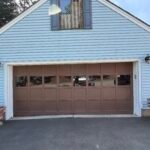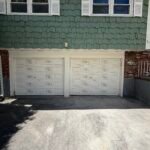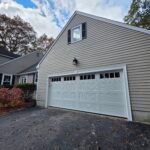
If your garage door has a broken spring, damaged cable, worn roller, or another isolated problem, repair usually makes more sense than replacing the entire door. Replacement becomes more practical when the door has major structural damage, several failing parts, repeated repair problems, or is reaching the end of its useful life.
The right choice depends on more than the repair price alone. The door’s age and condition, the extent of the damage, and how long you expect the repair to last all matter.
Repair or Replace a Garage Door: Quick Guide
Repair may be the better option when:
- One component has failed
- The door panels and structure are still in good condition
- Damage is limited to one repairable section
- The door has not needed repeated repairs
- Replacement parts are still available
Replacement may make more sense when:
- Several panels or structural components are damaged
- The door has recurring problems
- Repair costs are becoming high compared with replacement
- Replacement parts are difficult to find
- The door no longer meets your insulation or functional needs
Age also matters, but it should not be the only reason to replace a garage door.
How Old Is Your Garage Door?
Garage doors can often remain in service for 15 to 30 years, but there is no exact age when every door needs replacement.
How long a door lasts depends on:
- How often it is opened and closed
- Door material
- Weather exposure
- Maintenance
- Previous damage
- Condition of the springs, cables, rollers, tracks, and panels
A 15-year-old garage door that has been maintained and has only one worn component may still be worth repairing.
A door of the same age with damaged panels, worn hardware, recurring track problems, and corrosion may be a better replacement candidate.
The condition of the complete system matters more than age alone.
When Garage Door Repair Makes Sense
You do not need to replace an entire garage door every time a component fails. Many common problems can be repaired individually.
A Spring Has Broken
A broken spring alone usually isn’t a reason to replace the entire garage door.
If the panels, tracks, cables, and other major components are still in good condition, replacing the spring can restore normal operation.
The same applies to extension and torsion spring systems.
Learn more about garage door spring repair.
A Cable Is Damaged
Frayed, loose, or broken cables can often be replaced without replacing the garage door.
The technician should also determine why the cable failed. A spring, drum, alignment, or track problem may have contributed.
Repairing the cable without addressing the underlying cause can lead to another failure.
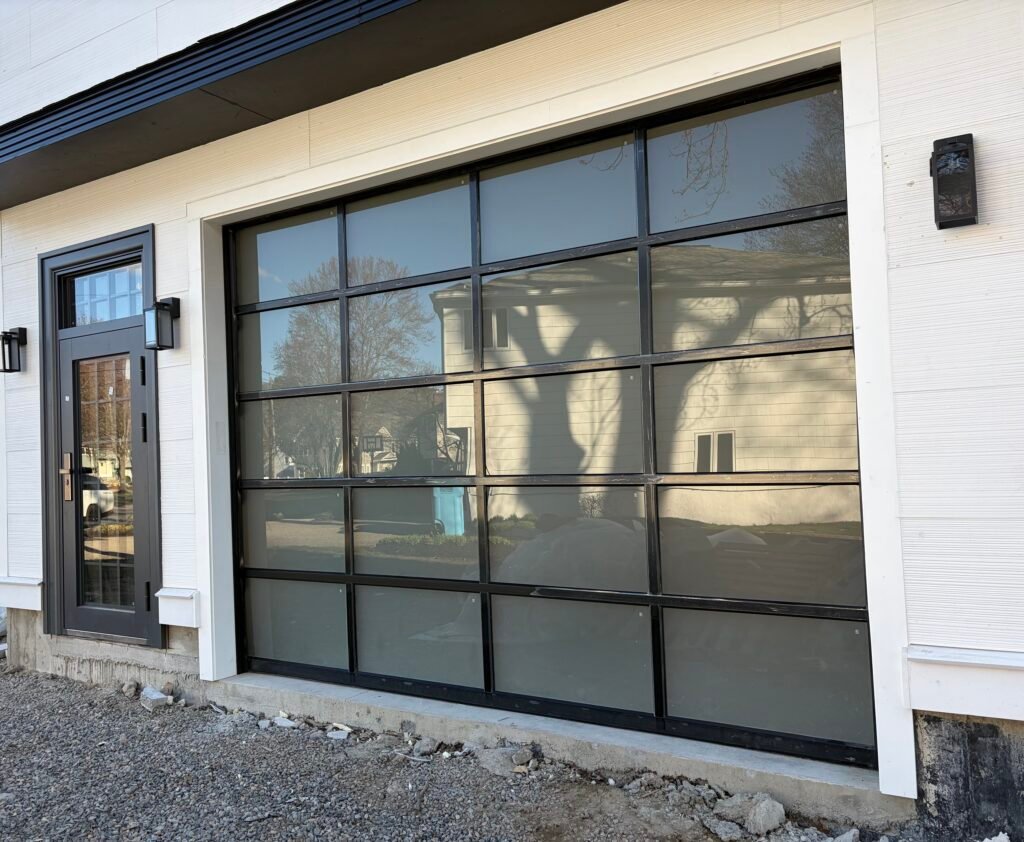
Rollers or Hinges Are Worn
Noisy or rough movement can sometimes come from worn rollers, hinges, or related hardware.
Replacing these parts can make sense when the rest of the door is structurally sound.
The Track Needs Adjustment or Repair
A garage door that rubs, shakes, or moves unevenly may have a track problem.
Minor alignment problems or isolated track damage can often be repaired. More serious damage should be assessed together with the rollers, cables, brackets, and panels.
One Panel Is Damaged
A damaged panel does not always require a new garage door.
If the damage is limited to one section and a compatible replacement panel is available, replacing that section may be enough.
The decision becomes more complicated when several panels are damaged or the original panel style is no longer available.
The Damage Is Mainly Cosmetic
Small dents, surface damage, faded paint, or other cosmetic issues do not automatically justify replacing the whole door.
If the door still operates correctly and remains structurally sound, repair may be the more practical choice.
The Limitation of Repair
A repair fixes the problem being addressed. It does not make every other part of an older garage door new again.
This matters when several components are approaching the end of their useful life at the same time.
For example, replacing a broken spring may solve the immediate problem. But if the door also has worn rollers, corroded hardware, damaged panels, and an aging track system, you may need another repair later.
That does not automatically make the first repair a bad decision. It simply means the overall condition of the door should be considered before spending heavily on one part.
When Garage Door Replacement Makes More Sense
Replacement becomes more reasonable when the problem extends beyond one repairable component.
Several Panels Are Damaged
One damaged panel may be repairable or replaceable.
Several cracked, bent, warped, or badly damaged sections can change the equation. At that point, the cost and availability of individual sections should be compared with replacing the complete door.
The Door Has Structural Damage
Severe impact damage can affect more than the visible panel.
The door sections, tracks, brackets, hinges, and supporting hardware may all be affected.
A door that no longer moves squarely through the opening or cannot be restored to safe operation may require more extensive replacement.
Repairs Keep Adding Up
One repair over many years is normal.
Repeated breakdowns within a shorter period are different.
If you have already replaced several components and another major repair is needed, compare what you are continuing to spend with the cost of a replacement door.
Replacement Parts Are No Longer Available
Older garage door models can become difficult to repair when matching panels or manufacturer-specific parts are discontinued.
A replacement may make more sense if the required part cannot be sourced or if using mismatched components would affect the door’s appearance or operation.
The Door No Longer Meets Your Needs
A garage door can still operate but no longer fit the home.
Replacement may be worth considering if you want:
- Better insulation
- A different door material
- Improved weather sealing
- Quieter operation
- A different style
- Updated windows or design
- A door better suited to an attached garage
These are not repair failures, but they can affect whether putting more money into an older door makes sense.
Garage Door Repair vs. Replacement Cost
Cost is often what turns a repair decision into a replacement decision.
Common garage door repairs in Massachusetts can range from roughly $150 to $850, depending on the problem and work required.
A complete garage door replacement can vary much more widely. Depending on the door size, material, insulation, design, hardware, and installation requirements, replacement may range from roughly $1,200 to $7,500.
| Option | Typical Cost Range |
| Common garage door repairs | About $150 to $850 |
| Garage door replacement | About $1,200 to $7,500 |
These ranges are useful for comparison, but price alone should not determine the decision.
A $500 repair on a garage door that is otherwise in good condition is very different from spending $500 on a heavily worn door that may need another major repair soon.
The 50% Rule
One simple way to compare repair and replacement is to look at how much the repair represents compared with the cost of a suitable new door.
If a repair begins approaching about half the cost of replacement, it is worth comparing both options carefully.
That does not mean a door must automatically be replaced at the 50% mark.
A relatively expensive repair may still make sense on a high-quality door with many useful years remaining. A cheaper repair may make less sense on a severely deteriorated door.
Use the percentage as a decision point, not an automatic rule.
Think About Cost Per Remaining Year
Another way to look at garage door repair vs replacement is to consider how long each option is likely to serve you.
A simple calculation is:
Repair cost ÷ estimated remaining years = approximate repair cost per year
You can make the same comparison for replacement:
Replacement cost ÷ expected years of use = approximate replacement cost per year
This is only a planning tool. No technician can predict exactly how many years a repaired or new garage door will last.
It can still help when you are deciding between a major repair on an aging door and putting that money toward a replacement.
For example, a lower repair price may look attractive initially. If the complete door is already heavily worn and likely to need more work soon, the long-term cost may be less favorable.
There Is Also a Middle Option: Repair Now and Replace Later
The decision does not always have to be repair forever or replace immediately.
Sometimes the practical choice is to complete the repair needed to make the garage door safe and functional, then plan for replacement later.
This can make sense when:
- The current problem can be repaired safely
- The door is getting older but still usable
- Replacement is likely within the next few years
- You need time to budget or choose a new door
- A full replacement is not necessary right now
A technician should be clear about whether a repair is expected to be a normal long-term fix or more of a practical bridge on an aging system.
How Massachusetts Weather Affects the Decision
Massachusetts weather can influence both repair needs and the value of certain replacement features.
Cold weather does not automatically cause a healthy garage door to fail. However, winter can expose existing wear in springs, seals, rollers, tracks, and other moving parts.
Moisture can also contribute to corrosion over time.
Snow and ice can create additional problems around the bottom of the door. If water freezes around the bottom seal, trying to force the door open can put unnecessary strain on the opener and other components.
These conditions do not mean Massachusetts homeowners should replace an otherwise good garage door.
They do mean weather exposure should be considered when evaluating an older door with existing corrosion, worn seals, repeated hardware problems, or damaged sections.
Insulation Matters More for Some Massachusetts Homes
Insulation can also affect the repair-or-replace decision, particularly when the garage is attached to the house.
An older uninsulated garage door may still operate properly. If it only needs a minor repair, replacement solely for insulation may not make financial sense.
However, if the door already needs significant work and you have an attached garage, comparing the insulation and weather-sealing options available with a new door can make sense.
This is especially relevant if the existing door has poor seals, damaged sections, or noticeable gaps around the opening.
What About an Older Garage Door Opener?
The garage door and the garage door opener are separate systems.
An old opener does not automatically mean the door itself needs replacement.
However, opener safety should be considered separately. Federal safety requirements for residential automatic garage door openers include reversing and entrapment-protection requirements, and the U.S. Consumer Product Safety Commission has advised replacing older non-reversing openers.
If the garage door itself is still in good condition but the opener is outdated, replacing only the opener may be the better solution.
Likewise, replacing the garage door does not always mean the opener must also be replaced. The opener should be checked for compatibility, condition, lifting requirements, and safety features.
Common Mistakes When Deciding Whether to Repair or Replace
Continuing to Repair a Severely Worn Door
Replacing one component at a time can become expensive when several parts of an older door are already failing.
Look at the condition of the entire system, not just the newest problem.
Replacing a Good Door Because One Part Failed
The opposite mistake also happens.
A broken spring, cable, roller, hinge, or opener doesn’t automatically mean you need a completely new garage door.
Ask whether the damage is isolated or part of a larger problem.
Ignoring Why a Part Failed
Replacing the failed component is only part of the repair.
If a cable frayed because of a track problem or a roller was damaged because the door was misaligned, the underlying issue also needs attention.
Comparing Only the Lowest Prices
A repair quote and replacement quote need to include comparable information.
Ask what parts, labor, hardware, removal, installation, and other charges are included before deciding which option costs less.
Assuming Age Alone Means Replacement
An older garage door can still be worth repairing if it is structurally sound and has been maintained.
Age should be considered together with condition, repair history, parts availability, and repair cost.
Repair or Replace a Garage Door After Vehicle Damage?
Vehicle impact can cause anything from a small dent to serious structural damage.
If only one section is damaged and a matching panel is available, panel replacement may be possible.
Replacement becomes more likely if the impact has:
- Damaged several panels
- Bent the track
- Distorted the door frame
- Damaged hinges or supporting hardware
- Prevented the door from moving safely
- Made replacement sections impractical or unavailable
Do not continue operating a door that appears crooked, unstable, or partially off its tracks after an impact.
Repair or Replace a Garage Door in Winchester and Greater Boston
Homeowners in Winchester, Boston, Woburn, Medford, Arlington, Stoneham, Lexington, and Melrose may eventually face the same question: is another repair worthwhile, or is it time for a new garage door?
There is no single answer based on location or age.
Older homes may have garage doors with discontinued panels, previous repairs, older hardware, or openings that require closer inspection before a replacement can be selected.
Massachusetts winters can also make worn weather seals, corrosion, and existing mechanical problems more noticeable.
The best decision comes from looking at the complete door rather than one failed part.
Questions to Ask Before You Decide
Before approving a major garage door repair or replacement, ask:
- What exactly has failed?
- Is the damage limited to one component?
- What condition are the panels, tracks, rollers, cables, and springs in?
- Are replacement parts still available?
- What does the repair estimate include?
- How does the repair cost compare with replacement?
- Is this likely to be a long-term repair?
- Does the replacement quote include removal and installation?
- Can the existing opener be reused?
- What warranties apply to each option?
For covered home improvement work on existing owner-occupied residential properties with one to four units, Massachusetts requires contractors to maintain Home Improvement Contractor registration. Homeowners can verify applicable registration information before hiring a contractor.
Frequently Asked Questions
Is it better to repair or replace a garage door?
Repair usually makes more sense when the problem is limited to one component and the rest of the door is in good condition. Replacement becomes more practical when the door has major damage, repeated breakdowns, several worn components, or repair costs that are becoming high compared with replacement.
How old is too old to repair a garage door?
There is no exact age when a garage door becomes too old to repair. A door that is 15 or 20 years old may still be worth repairing if it is structurally sound, while a newer door with serious impact or structural damage may need replacement.
Is a broken spring a reason to replace the garage door?
Usually not. A broken spring is a replaceable component. If the rest of the door is in good condition, spring replacement is often enough to restore normal operation.
Should I repair a garage door if the repair costs half as much as a new one?
Once a repair approaches about half the cost of a suitable replacement, it is worth comparing both options. The condition of the door, expected remaining life, recent repair history, and cost of the replacement should all be considered.
Can one damaged garage door panel be replaced?
Often, yes. If the damage is limited to one section and a compatible replacement is available, replacing one panel may be possible. Multiple damaged panels or discontinued sections can make complete replacement more practical.
Can I replace the opener without replacing the garage door?
Yes. The opener and garage door are separate systems. If the door is in good condition but the opener is worn, outdated, or no longer suitable, you can often replace the opener on its own.
Should I replace my garage door before it completely fails?
You don’t need to replace a functional door just because it is old. Planned replacement can make sense when the door shows repeated problems, significant deterioration, hard-to-source parts, or other signs that continued repairs are becoming less practical.
Which is cheaper, garage door repair or replacement?
Repair usually costs less upfront. In Massachusetts, common garage door repairs may range from roughly $150 to $850, while complete replacement can range from about $1,200 to $7,500, depending on the door, materials, and installation requirements. The less expensive option over time depends on the existing door’s condition and remaining useful life.
Get Your Garage Door Checked Before Deciding
Choosing whether to repair or replace a garage door is easier once you know what failed and the condition of the rest of the system.
A single broken spring or cable may only require repair. A door with repeated failures, extensive panel damage, worn hardware, or structural problems may be a better candidate for replacement.
5 Star Garage Doors serves Winchester, Boston, and surrounding Greater Boston communities. Contact the team to have your garage door inspected and discuss whether repair or replacement makes more sense for its current condition.